Wednesday, 18 July 2012

The Four Swimming Strokes

There are four strokes in Competitive Swimming. In this post, I will give you a brief outline of each of them, and I will tell you what Events consist of each stroke.

BUTTERFLY: Butterfly is swum on your front by using both arms to lift out of the water, then enter them in  the water to pull, lifting your head out of the water each stroke to breathe. The kick involves both legs kicking at the same time, like a dolphin.

BACKSTROKE: Backstroke is swum on your back by using your shoulder rotation to alternate your arms and pull through the water. It is swum with a flutter kick.

BREASTROKE: Breastroke is swum on your front by using both arms to do a sweeping pull underwater, and then a whip/ frog kick while extending the hands back past your head.

FREESTYLE: Freestyle is also known as "Frontcrawl" in the non-competitive swimming world. It is swum on your front my rotating your arms forward and pulling under the water with a flutter kick to propel you forward..

Friday, 13 July 2012

The Olympics - Competitive Swimming


The Olympics are a huge event in the world of competitive swimming. Considering there is only one major international meet a year (World Championships), and the fact that there is only 2 major international meets that are held in Long Course Meters every four years, having the Olympics every four years provides the sport with its biggest competition. The Olympics also provides the sport of competitive swimming international attention from people of all sports.

The qualifying process for the Olympics differs from country to country, but there is usually a national level meet called "Olympic Trials" that determines who goes. Typically, the top two swimmers in each event qualify for the Olympics, excluding the 100m Freestyle and 200m Freestyle events where the top four go due to relays.

Even if you make the top two for an event at Olympic Trials, there is a chance you still won't get to go. There is also the FINA Olympic Qualifying Standards, which are a list of times for each event that every swimmer around the world have to exceed. If any of the top two swimmers do not make these standards, no matter if they're top two or not, they do not get to go to the olympics. It's rather unfortunate that they have this rule; people can miss out on their life dreams by one one-hundredth of a second even if they come in the top two in their country. The Qualifying Standards are found here: http://www.fina.org/H2O/index.php?option=com_content&view=article&id=1691&Itemid=764

Thanks for reading! Make sure to stay tuned!

Monday, 9 July 2012

Swimming World Championships


The Swimming World Championships are held once annually. However, the pool sizes alternate each year.

Every even year that is not a Summer Olympic Year (2002, 2006, etc) the World Championships are held in a Short Course Meter pool. This competition, however, is less popular than the odd number years.

Every odd year (2007, 2009, etc) the World Championships are held in a Long Course Meter pool. This competition is the most popular of the two, as Long Course Meter (50m) pools are the standard pool used for International Competitions.

Every Summer Olympic Year, which occurs every fourth year, (2000, 2004, 2008, 2012, etc) the Swimming World Championships are cancelled, due to the fact that having two World Class competitions in one year is unnecessary. This only cancels the Short Course Meter championships, however.

Thursday, 5 July 2012

Lesson #5 - How to Float on Your Back


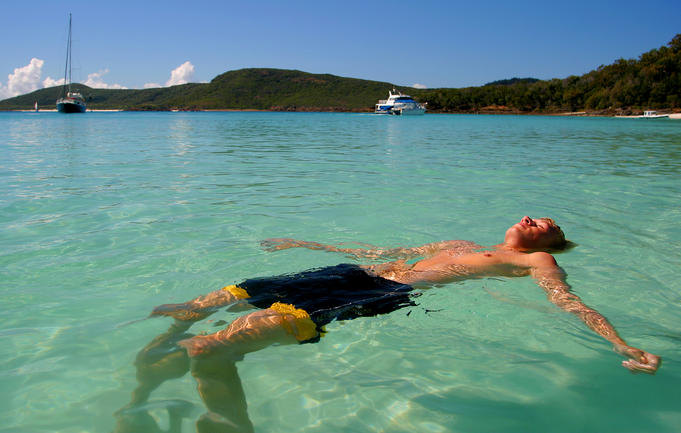
Welcome once again everyone! Today we're gonna learn a quite simple technique called floating on your back. This is a very comfortable and stable position if you are able to let yourself relax. This is also the position that most water safety experts suggest that you go in if you are having any trouble in the water, and therefore this is a vital skill when it comes to swimming.

Firstly, you'll most likely want to have a friend to help you out with this; it will make it a lot easier. You'll first want to get in the pool and preferably stay in the shallow end, where the water is low enough that you can stand up with your head completely out of the water. Next, you are going to try and lie back, with your friend/partner holding the back of your head. You can keep your feet on the bottom of the pool for this part.

So now that your head is in your friend's hands, you know that your face is never going to go under the water so you do not need to worry - you now have stability. Next, ask your friend to walk backwards, pulling you gently by your head. You should feel your body start to rise in the water due to the movement. Your feet will start to come off of the bottom of the pool - but don't worry! Your trustworthy friend will ensure that your face stays out of the water at all times.

Now here is what most consider to be the tricky part. You're probably asking "Okay, I feel my body starting to rise, but it keeps sinking. How do I actually stay afloat in the water?" The answer is quite simple. Air floats in the water, therefore you want to take a deep breath and hold it. This may take practice if your lung capacity is not up to par. However, you should at least be able to hold your breath for about 10 seconds. Also, you will want to wade your hands back and forth, putting pressure on the water which will help you stay higher in the water.

This is something that takes a lot of practice. The more you do it, the more comfortable you will become until one day you won't even need your friend to be there. The best advice I can give you is to not give up - your body needs time to get used to this technique!

Hope you enjoyed, and make sure to stay tuned for more!

Wednesday, 4 July 2012

Swimming Pool Sizes


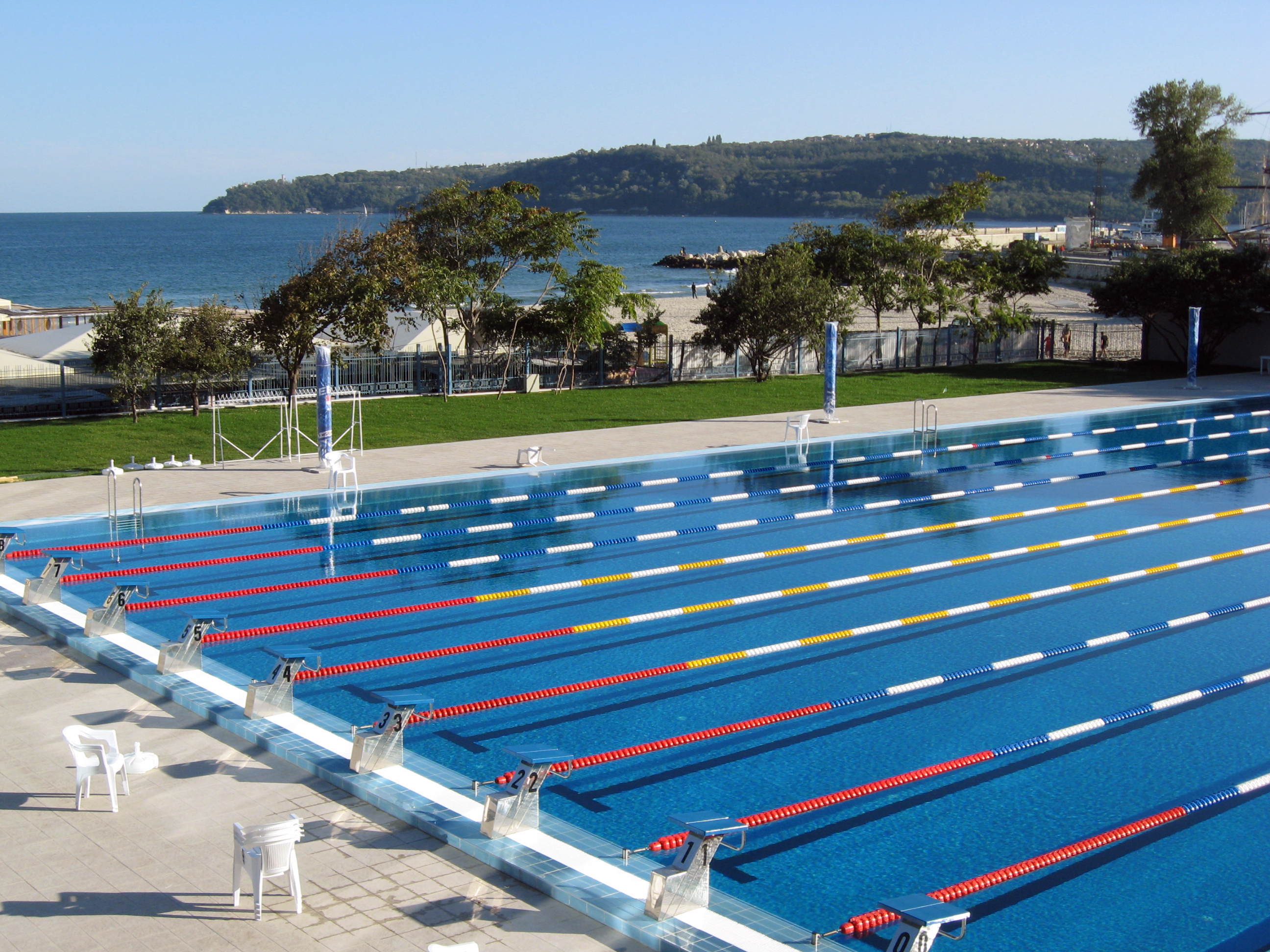
Welcome everyone! Today we're going to talk about the pool sizes that are used for competitive competition. There are three main pool sizes.

Short Course Yards - A Short Course Yards pool is a 25-yard pool that typically has 6-8 lanes (although it can have more). Short Course Yards pools are typically used in American competitions, although usually is not used in international competitions. Times swum in Short Course Yards are typically the fastest of the three.

Short Course Meters - A Short Course Meters pool is a 25-meter pool that typically has 6-8 lanes (although it can have more). Short Course Meters pools are often used in Canada, Australia and some European countries, and is sometimes used in international competitions. Times swum in Short Course Meters are typically slower than Short Course Yards but faster than Long Course Meters.

Long Course Meters - A Long Course Meters pool is a 50-meter pool that typically has 8-10 lanes. Long Course Meters pools are the most commonly used pools, and are used in most international competitions. Times swum in Long Course Meters are typically the slowest.

Friday, 22 June 2012

Butterfly Head Position


Welcome once again intermediate swimmers! Today we're going to be talking about arguably the most physically demanding stroke - butterfly. One of the most important aspects of the butterfly stroke, head position, is what we'll be covering.

Making sure your head positioning is correct in butterfly is like making sure your feet are touching the ground while you walk - it is absolutely essential, unless you want to put a giant extra workload on your shoulders. If you follow these pieces of advice your butterfly will feel a lot smoother, more controlled, and more relaxed. It will take a lot less effort to complete the strokes - the good thing is, head positioning is an easy thing to fix!

First we'll take a look at the breath. Notice how in the picture above, the swimmer is looking straight forward or even a little bit down. The swimmer also has her chin right on the surface of the water. This is vital - if your head is up too high, your feet will sink down lower and cause drag. Make sure that you are looking forward with your chin along the surface of the water when you breathe.

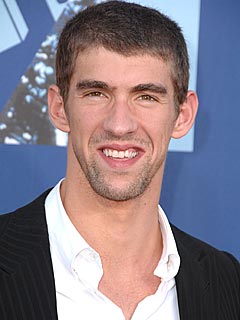
Secondly, in butterfly, you can keep your face in the water instead of breathing. This is considered to be faster in all cases except for one swimmer - Michael Phelps. Until we get to his level, however, we'll stick to saying that this is faster, because it is for everyone except for him due to his disproportionate body. All you have to do is simply take your stroke normally, except have your face in the water, looking down at the bottom of the pool. This eliminates the time it takes for you to lift your head up during each stroke. You can choose when you want to do this and the specific breathing pattern you want to use - much like freestyle.

Finally, and perhaps most importantly, is a special rule in butterfly. Your head should always enter the water before your hands. The most common mistake that people make in butterfly is entering their hands in the water first, and then having their head follow. If you do this this, your hands will cross over into each other, you'll throw the rhythm of the stroke off, you'll get a shorter pull, and you won't get a good dive and reach into the water off of each stroke. Always remember - your head enters the water first, then your arms follow.

Thank you for reading! I hope you enjoyed this lesson, be sure to stay tuned for more!

Wednesday, 20 June 2012

Tempo Trainer

Hello once again everyone! Today we will be reviewing a piece of equipment that you may not have heard of before - the tempo trainer. This tiny electronic device is actually waterproof, and believe it or not, it can help your swimming immensely! We're going to go over how it works, how it will help you, and the price range for this item.

Firstly, let's start off with how this thing works. Essentially, the tempo trainer makes a beeping sound at a regular interval that you set. Using the two buttons located at the bottom (the right sets the interval faster, while the left one sets the interval slower), you can adjust how many beeps per minute that you want to hear. The tempo trainer has a clip that allows you to clip it onto your goggle straps close to your ear. You can also put the tempo trainer within your swimming cap; both methods allow you to hear the beeping underwater.

The tempo trainer's main use is to keep a steady beeping interval. The purpose is to take a stroke every time you hear a beep. Being able to customize how fast the beep goes allow you to work on your stroke rate and general speed. The possibilities are endless with this device; you can keep lowering the frequency of the beeps to practice a low stroke rate, you can heighten the frequency of the beeps to work on a fast stroke rate for sprinting, you can use it to count your strokes for each length, to work on even timing of your strokes etc.

This very useful piece of equipment has an average pricetag of $30-40. It is a very reasonable investment for what it's worth.

Thanks for reading! I hope you enjoyed. Be sure to stay tuned for more equipment reviews, swimming tutorials, and athlete bios. So long for now!


Sunday, 17 June 2012

Dara Torres


Full Name: Dara Grace Torres
Nationality: United States of America
Born: April 15, 1967
Birthplace: Beverly Hills, California
Specialties: Freestyle, Butterfly
Height: 5'11”

Major Achievements/ Accomplishments:
- Has won 12 Olympic Medals (4 Gold, 4 Silver, 4 Bronze)
- Has competed in 5 Olympic Games
- Has set 3 World Records in the Women’s Long Course 50m Freestyle
- Has won at least one medal in each of the 5 Olympic Games that she attended
- Is the oldest swimmer ever to earn a spot on the U.S. Olympic Team

Interesting Facts:
- On August 1, 2007, at age 40 (just 15 months after giving birth to her first child), she won gold in the 100-meter freestyle at the U.S. Nationals in Indianapolis, her 14th national championship. On August 4, she broke her own American record in the 50-meter freestyle, 26 years after she first set the American record at just 15 years old
-Torres, at age 45, aims to qualify for the 2012 London Olympics

Personal Comments:
Dara Torres, at the moment, is the veteran swimmer of the world. She is currently aiming to qualify for her 6th Olympic Games at age 45, after giving birth to a child 6 years ago. After having won at least one medal at all five Olympic Games that she has attended, it will be interesting to see what this Super-Mom can do this year.

Friday, 15 June 2012

Lesson #4 - Frontcrawl Kicking


Welcome back, beginners! Today we're going to go over an essential part of any swimming you do - the kick! We will specifically be going over the frontcrawl kick since it is the easiest one and the one that most people start off with.

First, there is a simpe drill that you can do on land that will make it easier for you to complete this exercise once you're in the water. Simply sit on a chair or couch, and lift your legs up into the air. Then, simply lift one leg up at the same time that you put your other leg down. Then, alternate, and keep going until you can alternate your legs rapidly. Now it's time for the water!

To begin, get into shallow water. Hold on to a pool wall with both hands. Next, try to lift your lower body up towards the surface. This may take some practice if you have a weak lower back. If done successfully, your body should be completely flat against the surface of the water with your hands on the wall and your face out of the water and looking forward. Next, begin to alternate your legs the same way you did on land. Your feet should come out of the water about an inch high and should kick underneath the water about a foot deep, meaning that your feet should have a maximum range of a little more that one foot.

While doing this, you should feel your body push towards the wall that you're holding. If you're not feeling any resistance, try and point your toes more. Pointed toes allow the surface area of your foot to push against the water properly, and hence will move you forward. Anyway, that's all for today, make sure to stay tuned for more tutorials!

Thursday, 14 June 2012

Freestyle Technique: Bent Elbows


You see it all the time - it is often the ideal moment for any swimming photographer. The bent elbow arm recovery (along with a breath) is considered to be the most beautiful moment in a freestyle race; and for good reason, too!

The bent elbow recovery is one of two standard recovery options. The second is something called the straight arm recovery, which will be covered in a later post. Most professional swimming athletes and coaches, along with myself, believe that the bent arm recovery is the overall best option - however there has been much controversy surrounding the subject.

The bent arm recovery is performed by first taking one freestyle stroke. The hand moves all the way past the hip underwater, and then the elbow is the first thing to lift out of the water. The elbow lifts up until the hand is completely out of the water, and then the hand drives forward with the elbow still up high. The hand should enter the water at an approximate 45-degree angle, and then the next underwater pull occurs. Keep in mind that this is the recovery phase, meaning that your arm should be relaxed; the shoulder should be what drives the hand forward. The recovery phase is exactly what it implies; a short resting period for the arms before the next stroke.

The bent elbow recovery is by far the most commonly used arm recovery in freestyle. It is very versatile and can be used for any swimming distance. However, the shorter the distance, the more common the straight arm recovery becomes in high level competitions. We'll find out why on the next Intermediate Lesson, hope you enjoyed!

Wednesday, 13 June 2012

Jenny Thompson


Full Name: Jennifer Beth Thompson
Nationality: United States of America
Born: February 26, 1973
Birthplace: Denvers, Massachusetts
Specialties: Freestyle, Butterfly
Height: 5'10"

Major Achievements/Accomplishments:
- Won 12 Olympic Medals, including 8 Golds
- Won USA Swimmer of the Year Award in 1993 and 1998
- Won Female World Swimmer of the Year in 1998
- Won 14 gold medals in total at World Championships

Interesting Facts:
- Jenny was only 14 when she first burst onto the international scene, competing in the Pan-American Games where she won the 50m Freestyle and came third in the 100m Freestyle
- At 31 years of age, Jenny was the oldest member of the American 2004 Olympic Swimming & Diving Team

Personal Comments:
Jenny Thompson is a absolute legend in female athletics. She inspired many female athletes and acted as a role model to many. Her accomplishments were unprecedented by any female swimmer, and she helped the USA Swim team to become known as the best team in the world.

Tuesday, 12 June 2012

Hand Paddles

Hello everyone, and welcome to another Swimming Equipment section. Today we'll be going over all of the aspects of Swimming Paddles. This piece of equipment is extremely useful and helps with many technical aspects of the stroke. We'll be reviewing these aspects, as well as the price range for this item.

To start off, swimming paddles are placed on the hands the way that is illustrated below. Keep in mind that there are many different variations of paddles, therefore you will need to find the type that is most comfortable for you. Generally, swimming paddles increase the surface area of your hands.


Swimming paddles are very useful for many reasons. Firstly, as stated above, they increase the surface area of your hands. You can think of them as flippers for your hands. By increasing surface area, you will gain speed with every pull. Therefore, your body can get used to this speed and adapt to it so that you can swim faster without them on.

Secondly, by increasing the surface area of your hands, the paddles allow you to get a really good feel for the water. This also means that when using them, you will really feel any errors in your stroke and be able to correct them. If you have a pair of paddles that are similar to those in the first image, you can remove the bottom strap. This way, if there are any errors in your stroke, the paddle will come off completely or it will cause a lot of resistance.

One of the greatest features of swimming paddles is that they can be used for any stroke: Butterfly, Backstroke, Breastroke, or Freestyle. They can also be used for sculling, treading water, and many other techniques. Paddles are also relatively inexpensive, usually selling for anywhere from $5-20. Swimming paddles are well worth the price that you pay for them.

Thanks for reading! Be sure to stay tuned for more lessons, equipment section, and athlete bios. Remember, if you have any questions, post a comment and I will respond!

Monday, 11 June 2012

The Pull Buoy

The Pull Buoy is a fantastic piece of equipment that allows for the isolation of the arms. In other words, it is the exact opposite of a kickboard. We will now go over how to use the pull buoy, its positive effects and uses, as well as the price range for this item.

The Pull Buoy is very simple to use. It is typically placed between the legs, right underneath the groin area. The two inward ridges on the pull buoy are where the legs are placed. Here is a picture to illustrate this. Keep in mind that the pull buoy can be places anywhere between your legs that feels comfortable and that you can squeeze together to keep it in place.


The Pull Buoy has many uses and positive effects. Firstly, it isolates the arms, allowing you to focus solely on your pulling technique and endurance. Secondly, the pull buoy keeps your hips up high to the surface, allowing you to get used to swimming with your body flat in the water and your hips high near the surface. Finally, the pull buoy can also allow you to work on your breathing technique and body rotation without having to worry about what your legs are doing/ having your legs get in the way.

Overall, the pull buoy is an extremely effective piece of equipment that is a must for those who have trouble with their legs sinking. The pull buoy typically sells for around $5-12, making it a very inexpensive and effective addition to your swimming equipment. Thank you for reading! Please stay tuned as we have many swimming equipment, olympic athlete bios, and swimming lessons coming your way. Bye for now!

Sunday, 10 June 2012

Flippers / Swim Fins


Flippers, also known as swimming fins, are a valuable tool when it comes to swimming. Many people follow the assumption that flippers simply make things easier and allow you to swim faster. While this may be the case, flippers have many more uses than this. In this post I will explain why flippers are one of the most important pieces of swimming equipment that you can have.

Firstly, flippers allow you to really feel your kick. Flippers basically act as extended feet. Therefore, they allow you to realize what kick tempo, depth and power you need to use to maximize your kick efficiency. Also, since the flippers are so large, if you have an error in your kick, you will feel it more than you would with just your feet. The increases surface area of your foot when wearing flippers allows you to feel every part of your kick, and therefore you can evaluate your kick more effectively.

Secondly, flippers allow you to swim at a faster speed. Not only is this important for showing off and getting a workout done in a shorter amount of time, but this allows you to get used to the faster pace that you are swimming at. In other words, your body will adapt to the new speed it gains, which will allow you to adjust your stroke rate and kick tempo to match that speed even when you aren’t using the flippers. Flippers are excellent for conditioning your body to swim faster and more efficiently.

If you are unfamiliar with flippers/swimming fins, there is nothing to fear. Swim fins fit just like shoes; you’re typically going to be the same size in fins as you are in shoes. They typically sell for anywhere from $15-40, depending on the quality that you want. A rather cheap investment considering the benefit that they provide.

Well, that’s it for this section, I hope you enjoyed and learned a thing or two. Make sure to stay tuned; many lessons and equipment reviews are on their way!

Saturday, 9 June 2012

Michael Phelps


Full Name: Michael Fred Phelps
Nationality: United States of America
Born: June 30, 1985
Birthplace: Baltimore, Maryland
Specialties: Freestyle, Butterfly, Backstroke, Individual Medley (IM)
Height: 6'4"

Major Achievements/Accomplishments:
- Has won 14 Olympic Gold Medals
- Has won 66 medals at major international competitions (Olympics, World Championships, Pan-Pacifics)
- Won 7 gold medals at the 2007 World Championships (a Championship record medal count)
- Won 8 Gold Medals at the 2008 Olympic Games (an Olympic record medal count)
- Has received the "World Swimmer of the Year Award" six times and the "American Swimmer of the Year Award" eight times
- Has set a total of 39 World Records in his career so far

Interesting Facts:
Michael Phelps has his own foundation, called the "Michael Phelps Foundation". He plays golf regularly and enjoys video games in his spare time. Phelps kept a quote from Ian Thorpe in his locker during the Beijing Olympics which he used for motivation. He has three nicknames: MP, the Baltimore Bullet, and the Flying Fish.

Personal Comments:
I don't think there is much that is needed to be said. Michael Phelps is typically regarded as the best swimmer of all time, as well as commonly referred to as the greatest athlete of all time. With the many unprecedented feats that he has accomplished, it will be exciting to see what he is capable of at the 2012 London Olympics; his last swim meet before he retires.

Friday, 8 June 2012

The Flipturn


Hello once again Intermediate/Competitive swimmers! Today we're going to learn/go over one of the most important parts of any freestyle/backstroke race - the flipturn. The flipturn is the most effective way to transition between lengths of the pool. It is fast, simple and efficient and allows you to maintain the speed that you had going into the wall. We'll now take a look at a full overview of the flipturn.

The flipturn begins with the swimmer swimming towards the wall. One of the most important things to remember is not to slow down before you get to the wall. Think about a ball: if you throw it towards the wall slowly, it will bounce off slowly. However, if you throw it quickly, the ball will bounce off of the quickly. It is the same concept here, you want to swim towards the wall as quickly as you can and complete your flipturn at top speed so that you come off the wall at top speed.

Your final stroke into the wall should propel you into your flipturn. The final stroke should be taken about a meter and a half away from the wall. Once you're almost at the end of your last stroke, use the power from that stroke to tuck your head down and bring your feet over your head while blowing bubbles out of your nose. The concept is very similar to a somersault. Once your feet are over your head, bring them all the way over to the wall, and push off into a streamline with both feet. You want to make sure that your body is completely in line the whole time you are doing your flipturn. Your flipturn should not be on an angle; if it is, it will be slower and very tough to push off.

Two things that you can do to work on this concept would be somersaults on land, and a drill in the shallow end that involves pushing off the bottom and performing a somersault in the water and then landing on your feet again. The two most important things are tucking your head in and maintaining your momentum to ensure that you have enough speed to propel you all the way around. This is something that takes practice and commitment, so remember never to give up; you'll get it eventually.

I hope this has helped, and be sure to stay tuned for more lessons! Thanks for reading!

Thursday, 7 June 2012

The Kickboard


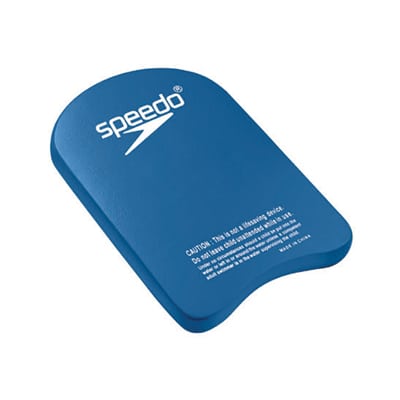
The kick board is a valuable piece of equipment that helps you work on the mechanics, endurance and power of your kick. It can be used for all types of kick, including Butterfly, Backstroke, Breastroke and Freestyle. The board is typically held with to hands at the very top, with your fingers wrapping around the top edge and your forearms resting on the rest of the board. The board floats, and can therefore be used to isolate the legs as the source of movement and eliminate your arms so you can work specifically on kicking. Butterfly, Breastroke and Freestyle kicking is usually done in this body position (be sure to keep your hips high and your body flat!):


Backstroke kicking is a little bit trickier with a kickboard. Typically, backstroke kick is done with a simple streamline. However, if a kickboard is needed for floatation, there are two ways to use it in backstroke kick:

The first is with the board above your head, which looks like this:


The second way is with the board over your chest and your arms hugging it, like this (although better technique is recommended! This boy's head should be back and his hips should be higher, for instance):


So there you have it. One of the most important pieces of equipment in swimming. The kickboard allows you to isolate and work solely on your kick and keeps you floating, providing a great opportunity to improve it if your kick is rather weak. Kickboards are very inexpensive as well! There are also many different styles of kickboards that you can choose from to help maximize your comfort. Kickboards can be found anywhere from $5-20, a great price for what it's worth.

Wednesday, 6 June 2012

Lesson #3 - Breathing and Blowing Bubbles


Welcome back beginners! Now, after last lesson, we now know how to put our face in the water without fear. The next step is to practice our breathing techniques; as you'll find out, this is one of the most important areas of swimming. Although it may seem a bit foolish, learning to blow bubbles is actually key if you want to learn proper breathing techniques.

So, let's get started. First, hop in the water and grab on to one of the pool walls with both hands. Before we start, you may want to practice this breathing technique beforehand. Simply take a deep breath in with your mouth, then close your mouth and breathe out through your nose. Once you're in the water with both hands on the wall, the next step is to bend over and enter your face in the water. Before your face enters, make sure to take a deep breath in with your mouth.

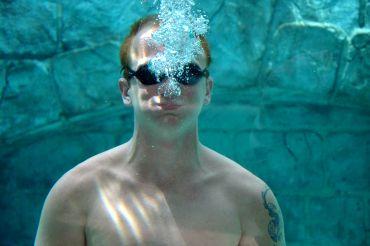
Next, once your face is submerged, slowly release the air through your nose, just like you practiced before. If done correctly, you should see many air bubbles zooming past your face towards the surface. Now, once you start to run out of air, try lifting your face out of the water and breathing in through your mouth again. From then on, it is simply a rinse and repeat method (quite literally!). It is advised that you practice this technique often, as it will prove to be very useful in the future. Try to see how many times in a row you can do the entire progression!

Congratulations! You have just learned the proper breathing technique in swimming. I hope you enjoyed the lesson and learned something from it. Stay tuned because next time we're going to talk about one of the most important factors in swimming - kicking!

Ian Thorpe


Full Name: Ian James Thorpe
Nationality: Australia
Born: October 13, 1982
Birthplace: Sydney, Australia
Specialty: Freestyle
Height: 6’5”

Major Achievements/ Accomplishments:
- Has won 5 Olympic Gold Medals
- Has won 11 World Championship Gold Medals, including 6 in the 2001 World Championships
- Was named the most successful athlete in the 2000 Sydney Olympic Games (with three golds and two silvers)
- Became the youngest male to ever represent Australia at 14 years old in the 1998 Perth World Championships
- Has set a total of 17 World Records during his career

Interesting Facts:
After retiring on November 21, 2006, Thorpe later staged a comeback nearly 6 years later, competing in the 100 and 200 meter freestyle events at the 2012 Australian Olympic Trials. However, he failed to qualify for the Olympics. Thorpe has said that he will continue to train, though, with his sights set on qualifying for the World Championships in 2013.

Personal Comments:
Ian Thorpe is known as the best freestyler of all time. Even after many obstructions in his path to success, including bronchitis, a disqualification at the Australian Olympic Trials in 2004, a strain of glandular fever, a broken hand, obsessive media attention, a 6-year retirement, a failed comeback, rumours of drug use and criticisms and speculations of his sexuality, he has still fought on to be the best that he can be. His achievements speak for themselves, however his personal life is something to consider; he is perhaps the most persevering swimmers of all time and an absolute legend.

Tuesday, 5 June 2012

The Streamline


Hello again Competitive and Intermediate swimmers! Today we'll be looking over the second fastest part of swimming besides the dive - the streamline. The streamline occurs right after the dive as well as after you push off of each wall in a race. The streamline helps you to be as hydrodynamic as possible so that you can slice through the water - much like an arrow slices through the air. I will be teaching you the basics of the streamline as well as tips to maximize your efficiency.

First, extend your arms in front of you and put one hand on top of the other - whichever hand feels more comfortable on top. Next, make sure all of your fingers are tightly closed together. You're now going to take the thumb of your top hand and wrap it around your bottom one so that the bottom of your thumb is tightly against the palm of your bottom hand.

Next, you will lift your arms up towards your face, keeping your hands locked together in the same position as described above. Once your biceps touch your face, bend your elbows (again, with your hands still in place) and try to extend your arms a bit past your head. Now, lock your elbows/straighten your arms. You should feel your biceps entirely behind your head, with your arms straight up above you and your hands locked in place. Your head should be out forward a bit from your arms.

Congratulations! You have just learned the proper streamline position. If you are not used to it, you may need to keep working on it to get your arms behind your head; your flexibility might not be that advanced yet. If not, just keep practicing and eventually you will be able to do it with ease. This is how you should push off of every wall from now on!

Stay tuned for Lesson #3 where we will be discussing the infamous Flipturn!